 +86 18030182217
 +86 18030182217
 sandydcsplc@gmail.com


Description
Product Core Brief
- Model: ABB PPC902AE101 (3BHE010751R0101)
- Brand: ABB (Switzerland-Sweden)
- Series: ABB Excitation Control System / UNITROL Series
- Core Function: I/O controller module for excitation and industrial automation systems. Condition: New Surplus, not refurbished.
- Type: Controller Module / I/O Module
- Key Specs: 110 V-380 V Input | 1 A-30 A Current Range | Modbus/Profibus Protocols ⚠️ Obsolete model, limited stock available.
Product Introduction
The ABB PPC902AE101 is a controller and I/O module designed for excitation control systems and industrial automation applications. This unit handles input/output signal processing for ABB UNITROL excitation systems and related DCS installations.As a legacy component, the PPC902AE101 provides reliable performance in existing facilities where system upgrades would require extensive reengineering. Plants running older ABB excitation or control systems benefit from direct replacement without major hardware modifications. Market availability continues to shrink, making early procurement planning essential for operations teams managing critical infrastructure.
Key Technical Specifications
| Parameter Name | Specification Value |
|---|---|
| Model Number | PPC902AE101 / 3BHE010751R0101 |
| Input Voltage | 110 V-380 V AC ±10% |
| Current Range | 1 A-30 A |
| Power Consumption | 5 W-130 W |
| Communication Protocol | Modbus RTU, Profibus DP |
| Operating Temperature | 0°C to 55°C |
| Storage Temperature | -25°C to 70°C |
| Humidity Range | 5% to 95% RH (non-condensing) |
| Protection Rating | IP20 |
| Mounting Type | DIN Rail or Panel Mount |
| Certifications | CE, UL (subject to verification) |
| Weight | Approximately 2.0 kg |
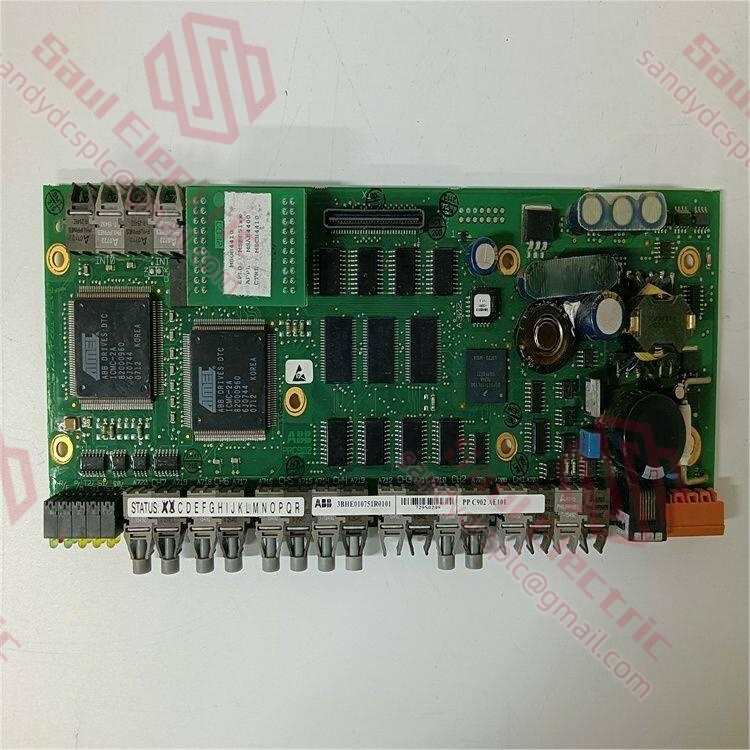
Note: Some specifications require confirmation against original ABB documentation. Firmware version varies by production batch.
Recommended Spares & Stocking Advice
| Spare Part Name | Model | Recommended Qty | Purchasing Notes | Est. Lead Time |
|---|---|---|---|---|
| Controller Module | PPC902AE101 | 1-2 units | Critical A-class component. Keep as buffer stock for emergency replacement. | 8-14 weeks |
| Control Board Fuse | ABB Standard Fuse Kit | 5 units | Consumable wear part. High turnover during fault conditions. | 2-4 weeks |
| Cooling Fan Assembly | ABB Fan Kit | 2 units | Preventive maintenance item. Replace every 3-5 years. | 4-6 weeks |
| Communication Cable | Profibus/Modbus Cable | 3 units | Keep spare lengths for quick swap during communication failures. | 1-2 weeks |
| Terminal Block Set | ABB Terminal Kit | 2 sets | Connector wear occurs during repeated maintenance cycles. | 2-3 weeks |
Inventory Strategy Notes:For the PPC902AE101, I classify this as an A-class critical spare. In my experience, excitation controller failures can shut down entire power generation or processing lines. The carrying cost of holding 1-2 units on-site pales against potential downtime losses. This is your insurance policy.Given the obsolescence signals in the market, consider a last-time-buy strategy if you operate multiple UNITROL or compatible ABB systems. Vendor consolidation matters here—partner with one verified surplus supplier who可以提供 test documentation and authenticity verification.For fast-moving consumables like fuses and cables, JIT replenishment from reliable suppliers works well. These items have low unit cost and short lead times, so don’t tie up capital in excess stock.
Quality Control & Inspection Process
Inbound Inspection:
- Verify traceability against original packing list and customs declarations
- Check serial number authenticity and anti-counterfeit labels
- Visual inspection: no corrosion, scratches, repair marks, or yellowing on housing
- Confirm accessories included: manuals, warranty cards, factory certificates
Live Functional Testing:
- Test environment: Dedicated excitation control test rack with load simulation
- Power-on self-test: LED indicators, startup sequences verified
- Communication test: Modbus RTU and Profibus DP handshakes confirmed
- I/O test: Full range simulation of input/output signals
- Load test: Continuous operation over 24 hours with temperature monitoring
- Test records: Formal Test Report generated for each unit
Electrical Parameter Testing:
- Insulation resistance test: 500 V megohmmeter, reading above 10 MΩ
- Ground continuity test verified
- Withstand voltage test performed where applicable
Firmware/Program Verification:
- Firmware version read and recorded (varies by production batch)
- Configuration backup: DIP switch and jumper settings photographed
- Multiple firmware versions may exist—specify acceptable range when ordering
Final QC & Packaging:
- Inspector signature confirmation on test documentation
- Anti-static bag sealing applied
- Bubble wrap plus carton packaging for shipment
- QC Passed label attached with inspection date
We can provide test videos and photos for customer review before shipment. All units pass the above tests to ensure proper functionality.
Technical Pitfall Guide: Field Installation Warnings
1. Firmware Revision Mismatch ❗Issue: New module firmware version differs from existing system, causing communication timeouts or excitation control errors.Avoidance: Record the old module’s firmware version before replacement (check label or read via software). Specify acceptable firmware range when purchasing. If mismatch occurs, contact supplier to flash or downgrade firmware.Real case: I saw a power plant where an engineer swapped a controller, and the excitation system kept reporting “Communication Timeout.” It took three days to realize the firmware bumped from V2.5 to V3.0, causing a protocol handshake failure.2. DIP Switch / Jumper Configuration Errors ❗Issue: Factory default settings don’t match site requirements for address, baud rate, or terminating resistors.Avoidance: Take a photo of the old module’s DIP switches and jumpers before swapping. Verify and replicate configuration on the new module before powering up. Bus terminating resistors (120 Ω) must only be at the two ends of the bus.This is a rookie mistake, but it happens all the time. Take a picture! Take a picture! Take a picture! Important things are worth repeating.3. Terminal / Cable Incompatibility ❗Issue: Interfaces on new and old modules aren’t identical—pinout changes or different connector types.Avoidance: Check the Wiring Diagram in advance. Prepare adapter terminals or be ready to recrimp. Note shield grounding methods (single-ended vs. double-ended).With some ABB excitation modules, even if the models look similar, the pinouts might differ. Always check the manual; don’t just guess.4. Power Supply Spec Differences ❗Issue: New module draws more power, and existing supply capacity is insufficient.Avoidance: Calculate total rack power consumption and leave a 20% margin. If nearing the limit, consider adding a supplementary power module.For example, if you mount multiple controller modules on one rack, the total load could exceed your 24 V supply capacity. Verify before installation.5. Electrostatic Discharge (ESD) ❗Issue: Module damaged by static electricity due to lack of ESD precautions.Avoidance: Wear an anti-static wrist strap. Work on an anti-static mat. Be especially careful in dry winter conditions.I watched an engineer touch a module without a strap. The moment it powered on, it smoked. That was $3,000 down the drain.
- WhatsApp: +86 18030182217
- Email: sandydcsplc@gmail.com
- Phone: +86 18030182217
- Wechat: +86 18030182217
- Website: www.xiongbaparts.com