 +86 18030182217
 +86 18030182217
 sandydcsplc@gmail.com


Description
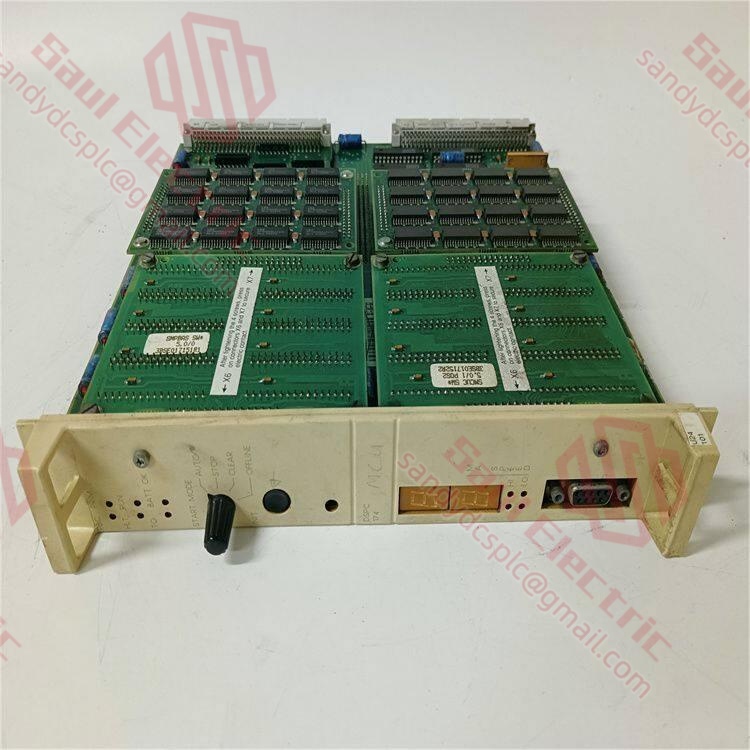
ABB DSPC174 3BSE005461R1: The Distributed Master Control Core for Industrial Process Control
In the system of industrial automation and process control, the ABB DSPC174 3BSE005461R1 is a high-performance distributed system processor controller tailor-made for high-demand on-site scenarios, and it is also a core component of ABB’s Advant Master and 800xA system platforms. It acts as a key master processor unit in Distributed Control Systems (DCS), just like the “brain center” of the entire control system, taking charge of the precise execution of complex control logic, real-time data processing in industrial sites, and the coordinated management of the whole system. Equipped with a multi-core processor architecture, this controller not only boasts powerful computing power but also extremely fast system response, enabling simultaneous multitasking and parallel processing, which greatly improves the overall operating efficiency and scenario adaptation flexibility of the automation system from the hardware level.
In fact, as a core control component of industrial automation systems, it is designed from the start for high-demand industrial sites. The DSPC174 3BSE005461R1 supports CPU redundancy configuration to build a highly available system architecture, which is also an important guarantee for the uninterrupted operation of critical industrial processes. It also integrates a full range of communication interfaces including Ethernet, serial communication and fieldbus, enabling seamless connection with various I/O modules, third-party devices and upper-level management systems without additional adapter modules. Its rugged industrial design allows it to cope with various harsh working environments with ease, providing a reliable and tangible control solution for automation systems in the power, petrochemical, water treatment and other industries.
Core Technical Specifications
| Parameter Name | Parameter Value |
|---|---|
| Product Model | DSPC174 3BSE005461R1 |
| Manufacturer | ABB |
| Product Type | Distributed System Processor Controller / Master CPU Module |
| Processor Architecture | PowerPC 440/Multi-core architecture, maximum processing speed 300MHz |
| Memory Capacity | 128MB SDRAM + 2MB Flash / 256MB RAM + 512MB Flash |
| Communication Interfaces | Dual Ethernet ports (10/100/1000Mbps), RS-232/485, Profibus DP, Modbus TCP/RTU |
| Operating Voltage | 24V DC (±10%), supports redundant power input |
| Operating Temperature | -25°C to +70°C (Standard industrial environment) |
| Storage Temperature | -40°C to +85°C |
| Physical Dimensions | 248mm×144mm×20mm / 240mm×160mm×100mm |
| Weight | 0.4kg to 0.95kg (Depending on configuration) |
| Protection Rating | IP20 |
| Safety Certifications | CE, UL, ATEX, IEC 61508 SIL 2/3, ROHS |
Key Features & Advantages
High-performance processing capability is the core strength that makes this controller competent for complex industrial process control. The DSPC174 3BSE005461R1 adopts an advanced processor architecture with powerful real-time computing performance, capable of efficiently executing various complex control algorithms and data processing tasks. Its multitasking capability allows the system to run multiple control loops and logic programs simultaneously, achieving a qualitative leap in the response speed and processing efficiency of the automation system. More in line with engineers’ operating habits, it supports IEC 61131-3 standard programming languages, including Function Block Diagram, Structured Text, Sequential Function Chart, creating a flexible development environment for on-site programming and debugging.
What kind of design enables the uninterrupted operation of critical industrial processes? The answer lies in its high reliability and redundancy design. This controller supports hot standby redundancy configuration; in the event of a primary controller failure, the backup controller will seamlessly take over all control tasks, fundamentally ensuring continuous system operation. Harsh industrial environments are never a weakness for it – the wide operating temperature range of -25°C to +70°C, combined with its rugged vibration and shock resistant design, allows it to run stably under various severe working conditions. At the same time, the product complies with the IEC 61508 SIL 2/3 safety standard, and this safety guarantee makes it easily adaptable to various safety-critical application scenarios.
All-dimensional communication integration capability makes it a “universal connector” in industrial systems. It is equipped with dual Ethernet ports, RS-232/485 serial interfaces, Profibus DP fieldbus interfaces, and also supports a variety of industrial communication protocols such as Modbus TCP/RTU, OPC UA and Ethernet/IP. This multi-protocol compatibility feature allows it to be easily integrated into the enterprise’s existing automation architecture, enabling efficient data interaction with PLCs, SCADA systems and other intelligent devices without additional transformation, greatly reducing the difficulty and cost of system integration.
Advanced diagnostic and maintenance functions save a lot of trouble for on-site operation and maintenance. The controller has built-in real-time system health monitoring and fault diagnosis functions, which can detect potential problems in equipment operation in advance and generate early warning information, allowing operation and maintenance personnel to shift from passive repair to active prevention. With the help of ABB’s Control Builder M engineering tool, remote configuration and firmware upgrade can also be realized, and equipment debugging can be completed without engineers going to the site, effectively reducing system downtime and improving overall operation and maintenance efficiency.
Application Fields
The application scope of the ABB DSPC174 3BSE005461R1 covers almost all scenarios in industrial automation with high requirements for reliability and control complexity. In the power industry, it is a core control component of power plant turbine control, grid synchronization and boiler management systems, laying a solid foundation for the stability and efficiency of the power generation process; it can be seen in both nuclear power plants and traditional thermal power plants, which is also a sufficient testament to its ultra-high reliability and safety.
In the oil and gas industry, it is used for pipeline monitoring, offshore platform automation and safety shutdown systems, and can maintain stable operation even in the harsh offshore environment of high salt spray and strong vibration; in the chemical industry, it undertakes the tasks of reactor control, distillation column optimization and hazardous area compliance management, providing double protection for the safety and efficiency of chemical production; in the water treatment industry, it is used for pump station control, filtration system scheduling and reservoir level management, realizing the automatic control of the entire water treatment process.
In addition, this controller is also widely used in automotive manufacturing, electronic manufacturing, food processing, pharmaceutical, iron and steel metallurgy and other industries, providing reliable control solutions for various industrial automation applications. It has flexible expandability and can be adjusted and upgraded at any time according to the changes in enterprise production needs, perfectly adapting to the personalized control needs of different industries.
Related Products
There is a rich variety of core supporting products compatible with the DSPC174 3BSE005461R1, which can build a complete industrial control system according to actual application needs, and each product has its own focused adaptation value:
AC 800M Controller: ABB’s high-end process controller, compatible with DSPC174, suitable for more complex control tasks;
S800 I/O Modules: ABB’s high-density I/O system, used in conjunction with DSPC174 to expand the system’s I/O capability;
PM864AK01: ABB’s process controller mainboard, can be used as an upgrade or alternative solution for DSPC174;
CI854A/3BSE030221R1: Communication interface module, expanding the network connectivity of DSPC174;
PP865A: ABB’s input/output module, working in collaboration with DSPC174 in automation systems;
DSQC Series Modules: ABB’s industrial robot spare parts, seamlessly integrable with DSPC174;
REM620A_F: Protection relay, used in conjunction with DSPC174 in power systems to achieve protection control.
Installation & Maintenance Tips
Before installing the DSPC174 3BSE005461R1, complete the basic environmental and material preparation first. First, confirm that the installation environment meets the product specification requirements, and carefully check the temperature, humidity and ventilation conditions in the control cabinet; then verify whether the 24V DC (±10%) power supply voltage is stable, and prepare the required installation tools and accessories at the same time. The installation process must strictly follow ABB’s installation guidelines to ensure the controller is firmly installed and all interfaces to be connected are in place. It is recommended to reserve sufficient heat dissipation space for the controller and avoid placing it close to high-power heating equipment.
To keep the controller running stably for a long time, daily maintenance details are essential. Regularly check the operating status and indicator information of the DSPC174 3BSE005461R1, and use the built-in diagnostic function of the device to monitor the system health in real time; keep the controller surface clean to prevent dust accumulation from affecting heat dissipation performance. For system configuration, fault diagnosis and firmware upgrade, it is recommended to use ABB’s officially recommended Control Builder M tool, which can maximize the compatibility and operational stability of the system. In addition, developing the habit of regularly backing up system configurations and programs can effectively avoid data loss caused by unexpected situations.
Product Assurance & Technical Support
ABB provides a full range of quality assurance and comprehensive after-sales service support for the DSPC174 3BSE005461R1. This product fully complies with international certification standards such as CE, UL, ATEX and ROHS, with strict factory control over product quality and environmental performance; at the same time, ABB provides a 12-month official warranty covering defects in materials and manufacturing processes.
Relying on its global technical support network, ABB can provide customers with professional technical consultation and fault diagnosis services. For the DSPC174 3BSE005461R1, ABB also commits to continuous spare parts supply and technical support, fundamentally ensuring the long-term stable operation of customers’ existing systems. Users can also obtain detailed technical documents and training resources through ABB’s official channels, helping on-site engineers fully familiarize themselves with product characteristics and maximize the performance potential of the controller.
Contact info
- WhatsApp: +86 18030182217
- Email: sandydcsplc@gmail.com
- Phone: +86 18030182217
- Wechat: +86 18030182217
- Website: www.xiongbaparts.com