
What This Hardware Solves
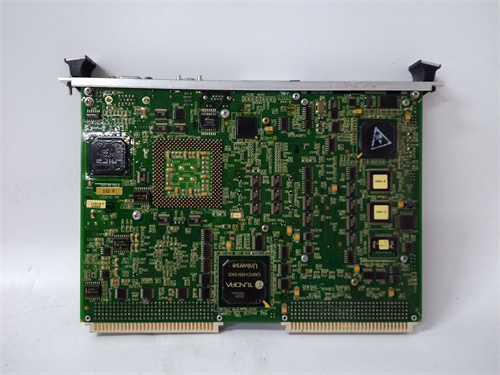
GE IS215UCVFH2AB is a dual‑slot VME‑form‑factor UCV (Universal Control Valve) controller card built for GE Speedtronic Mark VI turbine control racks. Acting as a dedicated single‑board real‑time computing unit, it executes critical closed‑loop control algorithms for gas and steam turbine valve positioning, speed regulation and load management. Unlike general‑purpose PLC CPU hardware, this board runs QNX real‑time operating system optimized strictly for turbo‑machinery deterministic control cycles, handling high‑priority valve actuation logic while exchanging massive real‑time process data across the VME backplane with other I/O and communication boards within the Mark VI rack. As an end‑of‑production legacy spare, it keeps power‑generation turbine assets online without undertaking full‑system migration overhauls.
Core Technical & Mechanical Details
- Full part number: IS215UCVFH2AB
- Product family: GE Speedtronic Mark VI turbine control system
- Form factor: Dual‑slot 6U VMEbus printed circuit assembly, installs inside Mark VI control module rack
- On‑board computing: 300 MHz Intel Celeron real‑time processor; 32 MB DRAM working memory, compact flash non‑volatile firmware storage, battery‑backed SRAM for alarm and event retention
- Operating OS: QNX real‑time multitasking OS for deterministic turbine control loop executionxm-dcs.com
- External interfaces: Front‑panel 10/100Mbps RJ45 Ethernet for HMI & host system link; dual RS‑232 serial ports for local configuration, Modbus‑RTU slave communication and field diagnostics; status LED array visualizes run, fault and heartbeat conditions
- Backplane interaction: High‑speed VME bus communication with rack I/O modules, VCMI communication boards and other peer controller hardware
- Power source: Draws operating power from VME backplane (+5 V, ±12 VDC)
- Operating ambient: 0 °C ~ +60 °C, indoor cabinet‑only installation; 5‑95 %RH non‑condensing humidity range
- Physical notes: AB suffix denotes specific hardware revision level. IS215UCVFH2AB cannot be directly swapped with IS215UCVEH2 series variants; firmware image and backplane slot configuration must match turbine project database settings.
Practical Field Deployment Scenarios
- Gas turbine control for GE Frame 5, Frame 6, Frame 7 and Frame 9 power‑generation units
- Steam turbine governing, valve sequencing and load control in combined‑cycle power plants
- Aero‑derivative gas turbine package control for on‑site power and offshore power‑generating facilities
- Balance‑of‑plant auxiliary control loops integrated within Mark VI rack architecture
- Spare‑part replacement for existing Mark VI installations experiencing controller hardware failure
- Refurbishment projects for legacy power‑plant turbine control cabinets avoiding full‑platform upgrade expense
Procurement & On‑Site Replacement Guidelines
- Confirm exact full part number IS215UCVFH2AB including revision suffix before purchasing. Other UCV controller part numbers differ in hardware revision and memory configuration and are not drop‑in replacements.
- Strict ESD anti‑static handling procedures are mandatory for this populated VME circuit board; static discharge can destroy processor and memory components.
- Observe complete lockout‑tagout safety process; cut rack main power before extracting or inserting VME controller boards.
- After physical installation, load the project‑specific turbine application firmware and database configuration onto the new controller.
- Verify VME backplane resource allocation, network IP address settings and serial‑port Modbus parameters match site design documentation.
- Execute controller warm‑start, perform full rack I/O point‑to‑point verification, then complete turbine simulation test prior to returning unit to service.
Typical Real‑World Fault Events Linked To This Board
- Controller fail‑safe trip: Corrupted compact‑flash firmware, backplane power rail deviation or internal memory hardware degradation
- HMI cannot establish network connection: Wrong Ethernet IP configuration, damaged front‑port RJ45 interface or network cable fault
- Serial Modbus communication total loss: Incorrect baud‑rate / parity parameters or RS‑232 transceiver hardware damage
- VME bus communication timeout with rack I/O cards: Poor backplane connector contact or hardware resource conflict
- Controller heartbeat LED extinguished: Missing VME backplane supply voltage or catastrophic on‑board component failure